Facing Charges for Pointing a Firearm at Another Person in South Carolina
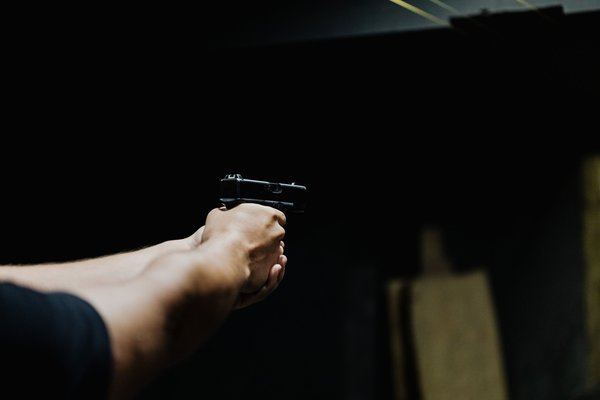
Presenting or pointing a firearm at another person is a felony in South Carolina punishable by up to five years in prison, and the law does not care whether the gun was loaded. It does not care whether you fired it, whether anyone was hurt, or whether you thought you were being careful. The statute is short and broad, which is why these charges get filed after arguments, road rage incidents, and property disputes where nothing else happened.
There is one built-in protection worth knowing immediately: the statute expressly does not abridge the right of self-defense.
What Does the Law Actually Say?
The offense appears at Section 16-23-410 of the state code. It makes it unlawful to present or point at another person a loaded or unloaded firearm. A violation is a felony, punishable by a fine at the court’s discretion or imprisonment of not more than five years.
The statute then adds a critical limit: it must not be construed to abridge the right of self-defense, or to apply to theatricals or similar performances.
Three details matter most:
- “Present” is broader than “point.” Displaying or brandishing a firearm at someone can be enough, even without aiming it.
- Loaded status is irrelevant. An unloaded gun, and in many cases something that appears to be a firearm, still supports the charge.
- It is a felony from the first offense. There is no misdemeanor version of this charge.
Why Self-Defense Is the Central Defense
Because the statute itself preserves the right of self-defense, this is the strongest position in most of these cases. South Carolina’s self-defense law comes from the Protection of Persons and Property Act at Section 16-11-440 of the state code, which also removes any duty to retreat from a place you have a lawful right to be.
To rely on self-defense, the evidence generally needs to show:
- You were not the aggressor
- You reasonably believed you were in danger of harm
- The force you used, including displaying the firearm, was reasonable for the threat
- You had no duty to retreat, which South Carolina removes anywhere you lawfully are
South Carolina also allows a pretrial immunity hearing under Section 16-11-450, where a judge can find your use of force was justified and dismiss the case before it ever reaches a jury. In a pointing and presenting case where you displayed a weapon defensively, that hearing can be the fastest route out.
Other Defenses That Work in These Cases
Beyond self-defense, these charges often have real weaknesses:
- You never pointed or presented it. Simply possessing a firearm, or having one visible while lawfully carrying, is not the same as presenting it at someone. Since the 2024 Constitutional Carry Act, lawfully carrying a firearm is common, and a visible gun is not automatically a crime.
- Mistaken identity or fabrication. These charges frequently arise from heated disputes where the accuser has a motive to exaggerate. There is often no physical evidence, just competing accounts.
- No firearm involved. The state must prove the object was a firearm as the law defines it.
- Defense of others or property. Acting to protect another person can support a justification defense.
- Constitutional violations. If the firearm was found through an unlawful search, or your statements were taken improperly, that evidence can be challenged.
Why These Charges Are Often Overcharged
Pointing and presenting cases regularly grow out of ordinary conflicts:
- A road rage encounter where each driver accuses the other
- A neighbor dispute over property lines, noise, or trespassing
- A confrontation with someone who came onto your property
- A domestic argument where a firearm was present in the home
- A situation where you drew a weapon because you felt threatened
In many of these, the person charged genuinely believed they were protecting themselves. Because there is often no video and no physical proof, the case comes down to credibility, and that is a fight worth having rather than conceding with a quick plea to a felony.
What This Charge Can Cost You Beyond Prison
A conviction under this statute is a felony, which means:
- Loss of firearm rights under state and federal law
- A felony record on every background check
- Damage to employment, housing, and professional licensing
- Immigration consequences for non-citizens
- Increased exposure if you ever face another charge
If the pointing allegation accompanies another offense, the state may also pursue additional weapons counts, which raises the stakes further.
Frequently Asked Questions
Is pointing a gun a felony in South Carolina even if it was not loaded?
Yes. The statute applies to a loaded or unloaded firearm, and the offense is a felony carrying up to five years regardless of whether the weapon could fire.
Can I be charged if I pointed the gun in self-defense?
You can be charged, but the statute specifically preserves the right of self-defense. If your use of force was lawful, that is a complete defense and may support a pretrial immunity dismissal.
Does the gun have to be pointed directly at someone?
Not necessarily. The statute covers presenting a firearm as well as pointing it, so displaying or brandishing it toward someone can be enough to support a charge.
What if the other person threatened me first?
That is central to a self-defense claim. Who escalated, what threat you faced, and whether your response was reasonable are exactly the questions that decide these cases.
Talk to a Rock Hill Weapons Lawyer About Your Case
A pointing and presenting charge is a felony built on a short statute and, very often, on one person’s word. Self-defense, credibility, and the absence of physical evidence give your defense real ground to stand on. At Okoye Law, our weapons charge defense team handles these cases across Rock Hill, Fort Mill, and York County. Call quickly, since witness accounts and video disappear fast, and ask about our flexible payment options. Contact Okoye Law for a confidential consultation.
Author Bio

Colin Okoye is the CEO and Managing Partner of Okoye Law, a Rock Hill, SC, criminal defense, personal injury, and family law firm. With years of experience, he has zealously represented clients in various legal matters, including DUI charges, divorce cases, and car accidents.
Colin received his Juris Doctor from the Charlotte School of Law and is a South Carolina Bar Association member. His previous experience working as an Assistant Public Defender in the Sixteenth Judicial Circuit has equipped him with the necessary skills and knowledge to represent clients in a wide range of cases effectively.