Caught Carrying a Concealed Weapon Without a Permit: Legal Options in SC
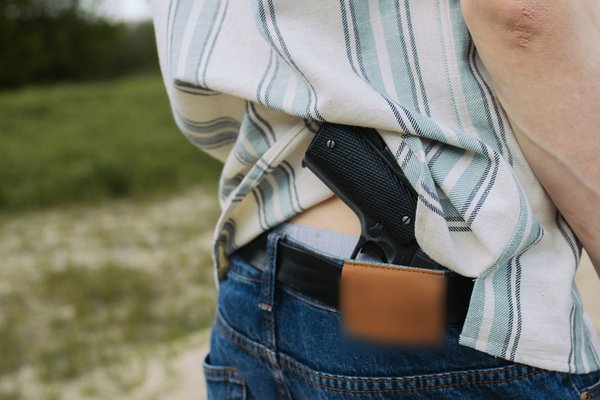
If you were stopped while carrying a concealed handgun without a permit in South Carolina, start with this: since the Constitutional Carry Act took effect on March 7, 2024, most legal adults can carry a handgun concealed or openly without any permit at all. The old statute that made carrying a concealed weapon a crime, Section 16-23-460, was repealed by that same act. So a charge today almost never means you were punished simply for lacking a permit. It means the state believes something else was true: that you were in a restricted location, or that you were not legally allowed to have a firearm in the first place.
Here is what that distinction means for your case in 2026.
What Changed Under Constitutional Carry
The 2024 Constitutional Carry Act, formally the South Carolina Constitutional Carry/Second Amendment Preservation Act of 2024, reshaped how these charges work. Under current law:
- Most adults who are not otherwise prohibited can carry a handgun openly or concealed without a permit or training
- Section 16-23-460, which criminalized carrying concealed weapons, was repealed effective March 7, 2024
- Carrying a firearm openly does not by itself give an officer reasonable suspicion to stop, detain, or search you
Concealed weapons permits still exist and remain useful, mainly for reciprocity when traveling to other states and for carrying in certain places. But not having one is not, standing alone, the crime it used to be.
So Why Were You Charged?
If you are facing a charge, the state is almost certainly relying on one of these theories:
- You carried into a restricted location. State law still bars firearms in places like law enforcement or detention facilities, courthouses and courtrooms while court is in session, polling places on election day, government or school district meetings, schools and school athletic events, and properties posted with a compliant no-carry sign.
- You are a prohibited person. People with certain convictions, those subject to a domestic violence order, and others barred by state or federal law cannot legally carry, and constitutional carry did not change that.
- The carry was connected to other conduct. Displaying a weapon during a dispute, pointing a firearm, or carrying while committing another offense creates separate charges.
- The firearm itself was unlawful, such as a stolen weapon or one with an altered serial number.
Identifying which theory the state is using is the first step, because each is defended differently.
What Penalties Apply if Unlawful Carry Is Charged?
Where an unlawful carrying charge does apply under Section 16-23-20, the penalties in Section 16-23-50 escalate:
- First offense: a misdemeanor, up to one year in jail, a fine up to $1,000, or both
- Second offense: a misdemeanor, up to three years
- Third or subsequent offense: a felony, up to five years
One detail often missed: if the issue was carrying into a business simply posted with a no-carry sign, the law provides that you may be charged under Section 16-11-620 rather than penalized under the unlawful carry statute. That distinction alone can change the entire case.
Your Legal Options and Defenses
Because the law changed recently, these cases are frequently charged on outdated assumptions. Strong defenses include:
- You were lawfully carrying. If you are a legal adult who is not prohibited and were not in a restricted place, you committed no offense under current law.
- The location was not actually restricted. Whether a place qualifies, or whether a posted sign met the legal requirements, is technical and often not satisfied.
- You did not knowingly enter a restricted area. Awareness matters, and many people have no idea a particular location qualifies.
- You are not a prohibited person. If the charge rests on a prior conviction or an order that does not actually disqualify you, the case fails.
- The stop or search was unlawful. Since carrying is lawful for most people, an officer needs more than the presence of a firearm to justify a stop or a search. If they lacked it, the weapon can be suppressed.
Why an Old Conviction Might Be Clearable
Here is an option many people do not know they have. South Carolina now allows certain unlawful carry and unlawful possession convictions to be expunged under Section 22-5-910. If you carry an old conviction from before the law changed, it is worth reviewing whether you qualify to clear it, since a weapons conviction on your record affects employment, housing, and your firearm rights going forward.
Frequently Asked Questions
Do I still need a concealed weapons permit in South Carolina?
Not to carry legally as a non-prohibited adult. A permit remains useful for reciprocity in other states and for certain locations, but lacking one is not itself a crime under current law.
Can police search me just because they saw my gun?
Generally no. South Carolina law states that carrying a firearm openly does not by itself create reasonable suspicion to stop, detain, or search a person.
What if I did not know the location was off limits?
Knowledge is relevant, and whether a location legally qualifies or a sign actually complied with the requirements are both technical questions the state must satisfy.
Can an old concealed weapon conviction be expunged?
Possibly. South Carolina allows certain unlawful carry and possession convictions to be expunged, so an older conviction is worth having reviewed for eligibility.
Talk to a Rock Hill Weapons Lawyer About Your Charge
The law here changed recently, and charges are still being filed on assumptions that no longer match the statute. That works in your favor when someone actually reads the current law against the facts of your stop. At Okoye Law, our weapons charge defense team defends carry cases across Rock Hill, Fort Mill, and York County, and our expungement team can review older convictions. Call soon, and ask about our flexible payment options. Contact Okoye Law for a confidential consultation.
Author Bio

Colin Okoye is the CEO and Managing Partner of Okoye Law, a Rock Hill, SC, criminal defense, personal injury, and family law firm. With years of experience, he has zealously represented clients in various legal matters, including DUI charges, divorce cases, and car accidents.
Colin received his Juris Doctor from the Charlotte School of Law and is a South Carolina Bar Association member. His previous experience working as an Assistant Public Defender in the Sixteenth Judicial Circuit has equipped him with the necessary skills and knowledge to represent clients in a wide range of cases effectively.